
SporeCount Agricultural
Patent-pending center-baseline pathogen monitoring for greenhouses, cannabis operations, and food production. Detect airborne threats 5–14 days before visible symptoms — and reduce fungicide applications by 40–50%.
Center-Baseline Pathogen Monitoring System
Our patent-pending methodology (Application #63/938,784) establishes the geometric center of your facility as a baseline reference point, with peripheral sampling locations positioned at strategic intervals throughout the growing environment.
By calculating deviation ratios between center and peripheral readings, SporeCount identifies pathogen ingress points, airflow anomalies, and contamination hotspots — often 5–14 days before visible symptoms appear on crops.
How It Works:
- Baseline sample collected at geometric center of facility
- Peripheral samples collected at strategic locations
- Deviation ratios calculated to identify contamination patterns
- Trend analysis tracks pathogen levels over time
- Actionable alerts when thresholds are exceeded
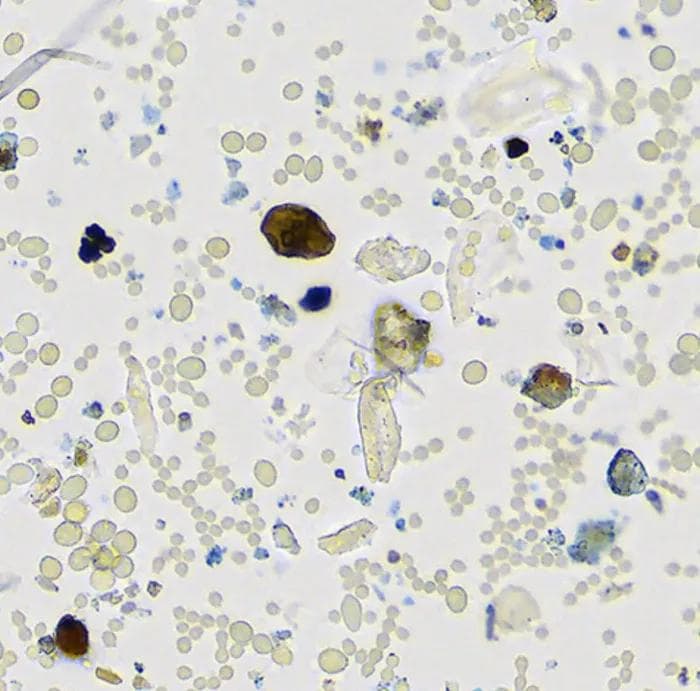
Key Pathogens We Monitor
SporeCount detects 65+ fungal taxa. Here are the critical agricultural pathogens our center-baseline method is designed to catch early.
Powdery Mildew
CriticalErysiphales spp.
The most common greenhouse pathogen. SporeCount detects airborne conidia 7–14 days before visible white patches appear on leaves.
> 50 spores/m³ = elevated risk
Botrytis (Gray Mold)
CriticalBotrytis cinerea
Devastating crop pathogen in high-humidity environments. Our monitoring catches rising Botrytis levels before bud rot develops.
> 100 spores/m³ = elevated risk
Aspergillus / Penicillium
HighAspergillus & Penicillium spp.
Key indicator organisms for cannabis compliance. Elevated levels may indicate storage issues or HVAC contamination.
> 500 spores/m³ = elevated risk
Fusarium
HighFusarium spp.
Root rot and wilt pathogen detectable in air before soil symptoms appear. Critical for greenhouse vegetable operations.
> 50 spores/m³ = elevated risk
Cladosporium
ModerateCladosporium spp.
Ubiquitous outdoor fungus. SporeCount tracks indoor/outdoor ratios to identify ventilation problems and filter effectiveness.
Deviation from baseline = investigate
Alternaria
ModerateAlternaria spp.
Early blight and leaf spot pathogen. Monitoring airborne levels helps time protective fungicide applications precisely.
> 100 spores/m³ = elevated risk
Air Testing + Surface Testing
Comprehensive environmental monitoring combining airborne pathogen detection with surface contamination analysis.
Air Testing
Volumetric air sampling captures airborne spores and particulates at calibrated flow rates. Our center-baseline methodology positions samplers to detect pathogen ingress before contamination spreads.
- Calibrated volumetric air pumps
- Spore trap cassettes (standard & high-volume)
- Center-baseline sampling methodology
- Indoor/outdoor ratio analysis
- 65+ fungal taxa identified per sample
Surface Testing
Tape lift and swab sampling for direct surface contamination analysis. Identifies settled spores, active growth, and biofilm formation on equipment and growing surfaces.
- Tape lift samples for settled spores
- Swab sampling for equipment surfaces
- Biofilm and active growth detection
- HVAC system contamination assessment
- Post-remediation verification testing
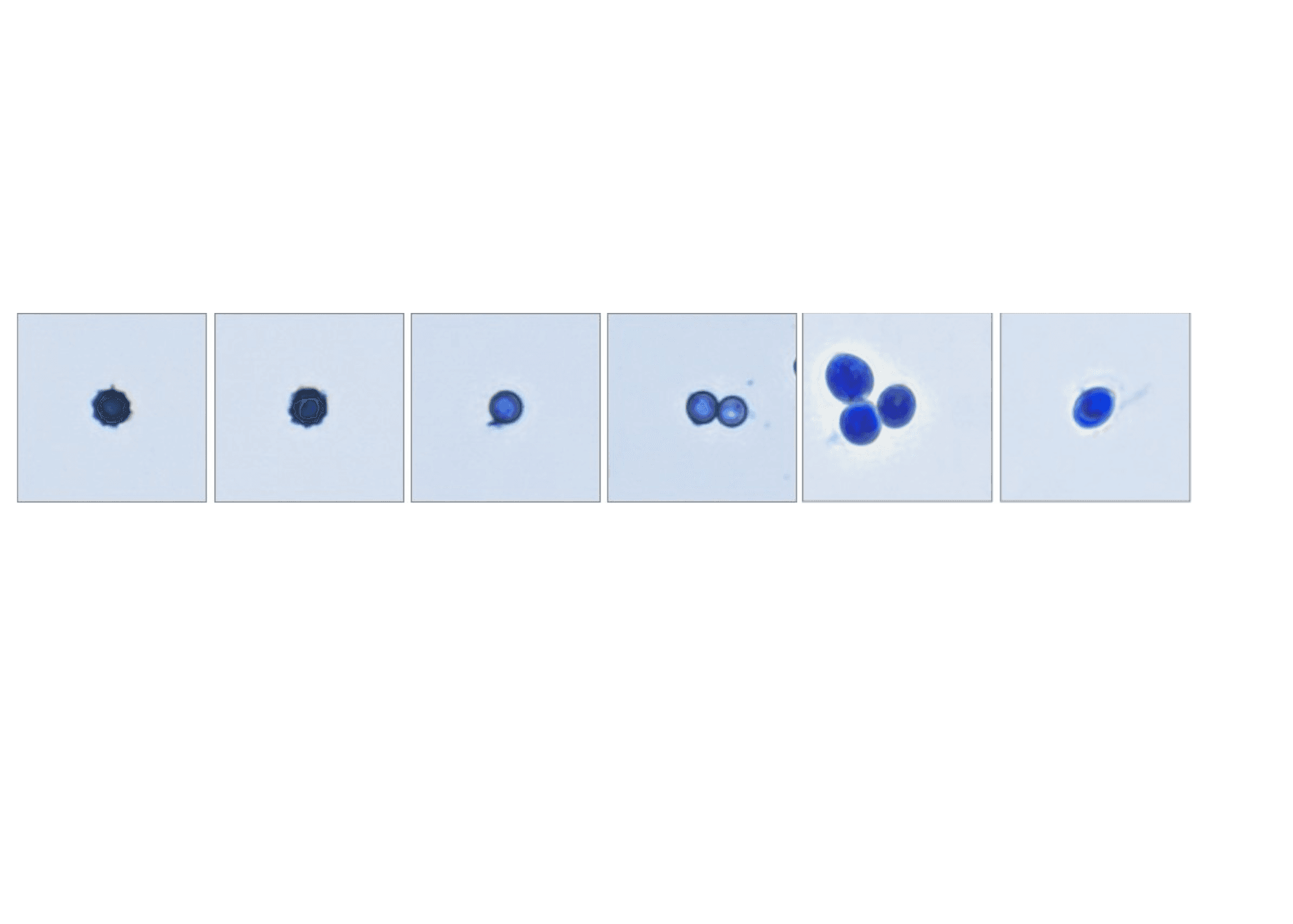
Dormant & Fragile Spores
Traditional culture-based testing only detects viable (living) organisms — missing dormant spores and fragile structures that can reactivate when conditions change. This creates dangerous blind spots in your monitoring program.
SporeCount's direct microscopy approach detects all spore structures regardless of viability — including dormant spores, fragile hyphal fragments, and non-culturable species. This gives you the complete picture of your growing environment.
SporeCount vs. Culture-Based Testing
See why leading agricultural operations are switching from traditional culture methods to SporeCount's direct microscopy approach.
| Feature | SporeCount | Culture Method |
|---|---|---|
| Results Turnaround | Next business day | 7–14 days |
| Taxa Detected | 65+ fungal taxa | 10–15 culturable |
| Dormant Spores | Detected | Missed entirely |
| Fragile Structures | Detected | Destroyed in process |
| Quantitative Data | Spores per m³ | CFU (colony counts) |
| Sampling Method | Center-baseline (patent-pending) | Random or fixed |
| Trend Analysis | Cloud platform with history | Manual record keeping |
| Compliance | FSMA, HACCP, SQF, CanadaGAP | Varies |
Built For Your Industry
SporeCount's center-baseline monitoring methodology adapts to any enclosed growing or production environment.
Cannabis & Hemp
Mandatory microbial testing for licensed producers. Catch contamination early in the growing cycle to protect your crop and maintain compliance with Health Canada and state regulations.
Greenhouse Operations
Continuous monitoring for greenhouse vegetables, floriculture, and propagation facilities. Proactive pathogen detection prevents devastating losses from powdery mildew and botrytis.
Food Processing & Storage
FSMA and HACCP compliant environmental monitoring for food manufacturing, packaging, and cold storage. Documented pathogen surveillance for regulatory audits.
Grain & Commodity Storage
Monitor airborne fungal levels in grain elevators, silos, and commodity storage facilities. Prevent mycotoxin contamination and storage losses before they start.
The Economics of Prevention
Proactive monitoring pays for itself by reducing chemical inputs, preventing crop losses, and ensuring compliance.
Targeted applications based on real data — not calendar-based spraying.
Catch airborne pathogens before visible symptoms appear on crops.
vs. 7–14 days for culture. Make decisions while they still matter.
Digital chain of custody and cloud reporting for all audits.
Client Resources
Everything you need to manage your SporeCount monitoring program.
New Client Registration
Get started with SporeCount Agricultural. Register your facility and set up your monitoring program.
Client Portal
Access your account, submit samples, and manage your monitoring program.
Chain of Custody
Submit samples and track your chain of custody documentation through our digital portal.
Order Supplies
Reorder sampling supplies including cassettes, swabs, and shipping materials.
Protect Your Crops with Data
Start monitoring your growing environment with SporeCount's patent-pending center-baseline methodology. Next-day results mean you can act fast when it matters most.
Already a client? Access Chain of Custody Portal • View Results Dashboard